
Returning to Exercise After an Injury

The hardest part of recovering from an injury is often not the injury itself. It is the moment when the pain has faded, you feel fine, and every instinct tells you to pick up exactly where you left off. That moment is where most re-injuries happen. Here is how we guide people back to full training, and why the slow route is nearly always the fast one.
Pain-free is not the same as ready
Tissue heals faster than it regains strength. A hamstring that no longer hurts may still be producing considerably less force than the other side, and a calf that feels fine walking may not be ready for the load of running downhill. That gap between feeling better and being better is where a staged return earns its keep.
Use criteria, not the calendar
Rather than "six weeks off, then back to normal", we set specific tests for each stage: full range of movement, strength within ten per cent of the other side, the ability to hop or change direction without pain, and so on. You move to the next stage when you pass the test, not when a date arrives. It removes guesswork and it takes the emotion out of the decision.
Build volume before intensity
When you restart, increase how often and how long you train before you increase how hard. A runner returning from injury might begin with three short easy runs a week, add distance gradually, and only reintroduce speed work once easy running has been comfortable for a couple of weeks. The same principle applies in the gym: more sets at a lighter load first, heavier loads later.
Keep what you built in rehab
The strength work that got you through rehabilitation is not something to drop the moment you are back training. Keeping two short sessions a week of the exercises that targeted your weak points is the single best insurance against the problem returning.
Expect some setbacks
A slightly grumpy tendon or a stiff morning after a harder session is normal and does not mean you have gone backwards. The rule of thumb we use is that discomfort during or after training should settle within 24 hours and should not be getting worse week on week. If it is, ease back a stage rather than pushing through.
Get a plan
If you are returning from a significant injury or surgery, or you have already had one false start, a structured return-to-sport plan makes the whole process simpler and safer. Our sports rehabilitation team builds these every week.
Practical advice from the team.
Short, useful reads on movement, recovery and working well, written by the people who treat you.

5 Ways to Reduce Back Pain When Working at a Desk
Small changes to how you sit, move and set up your workspace can make a big difference to a sore back. Here are the five we recommend most often.
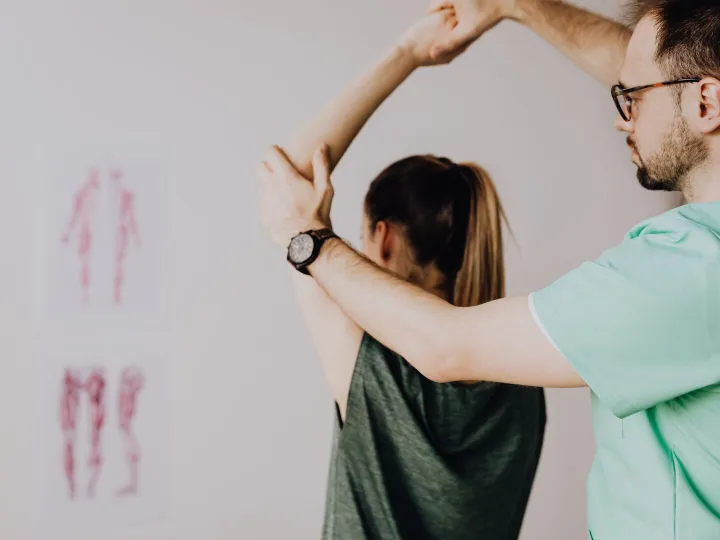
When Should You See a Physiotherapist?
Most people wait longer than they need to. Here is how to tell when a niggle needs professional attention, and what to expect when you come in.

Returning to Exercise After an Injury
Coming back too fast is the most common reason an injury returns. A staged approach gets you back to full training with far less risk.
Ready to take the next step?
Whether you're recovering from injury, looking to improve performance or exploring workplace wellbeing, our team can help you find the right way forward.
Northwell
Physiotherapy, rehabilitation, health assessment and performance coaching in the heart of Manchester.
14 Ancoats Square
Manchester M4 6DE